Debugged_Database
Sound database and ezine exploring the unknown
The process behind debugged_database
About The Project
The Debugged Database is a sound investigation project and collection of field recordings from three abandoned locations in Berlin.
Inspired by an obscure and dystopian future, this project focuses on exploring the
magic dispute and relationship between industrialism and nature through sonic experimentation.
Abandoned spaces [industrial sites and warehouses in particular] represent the decay of our society, based on capitalist ideals, where concrete and steel dominate grass and soil and mother nature is suffering every day...
These mystical spaces predict in some way a dark and negative future that awaits us, the _DebuggedSoundProjekt is deeply influenced by these feelings as they resonate in the 21 minute long piece available soon on the _debuggedatabase bandcamp page
The influences behind this project are very diversified and gently flow between abstract and concrete concepts, they vary from creative techniques and aesthetics from the world of foley and cinematic sound design [especially horror and sci-fi ones] to libertarian ideologies like the concept of "temporary autonomous zone" [and the encounter with various of them around Europe].
The magic of recycling degraded locations just for a few nights, giving birth to an autonomous space out of the mainstream business logics opened our minds deeply.. just observing the architecture and the machines in such places triggers in us an infinite flow of thoughts and a heavy dose of creative inspiration.
Like human beings, spaces have their own vital cycle between "life" and "death", from the construction to the demolition and so on... Our purpose is to recreate the particular sensations and emotions felt in "dead" degraded spaces, where time seems to stop for years, decades or even centuries, taking a break from this globalized, fast and energetic world.
The recordings have been took in Barenquell Brauerei, Kinderkrankenhaus Weißensee and Spreepark.
For every location a dedicated chapter can be found, with a short history and one or more audio snippets of the recordings, with the aim to recreate the soundscape perceived and bring back to life the intense sensations of every unique space.
The final piece, [_debuggedsoundprojekt], re-assembles the various field recordings and guides them through an evolving sonic metamorphosis with the use of various visionary tools and techniques like feedback loops, resampling and granular synthesis [just to name a few]
The website is in a continuous evolution,the articles have been written and witnessed by an anonymous member of the sound projekt and new ones will be added soon as our experience as a sound investigation project evolves throughout time...
.
.
.
.
.
Locations
By Anonymous User
01. Bärenquell Brauerei
After hearing some quite interesting stories about this place, one spring Sunday i decided to pack my bag and recorder and go visit the abandoned brewery with Kai, a
friend and soundscape_explorer like me.
Once outside the main gate and intimidated by razor wire everywhere, we were lucky enough to meet two young kids that knew the location pretty well and guided us through a "secret" entrance...
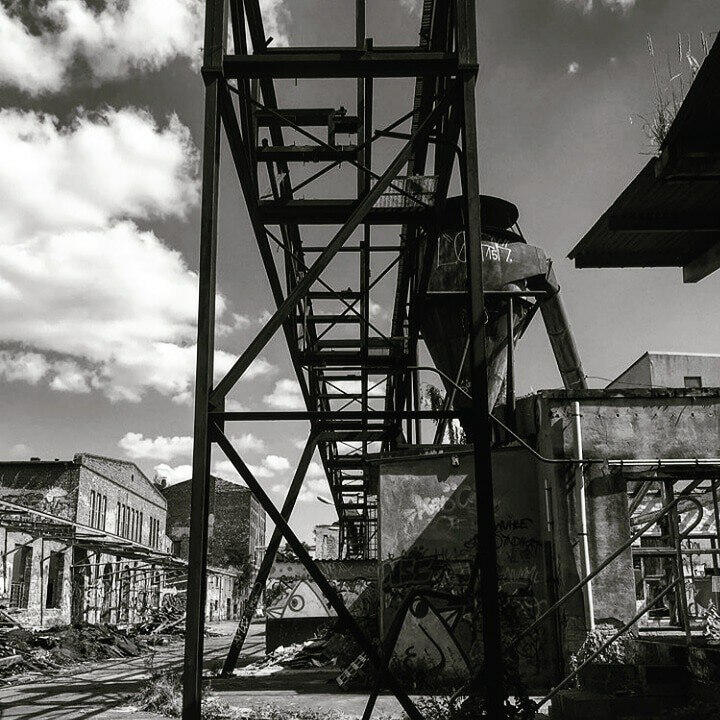
Once busy, now inanimate and soundless, the deserted Bärenquell Brauerei produces a multitude of clues as it begs to tell its sorry story – metal stairways, platforms overlooking great spaces where inebriating substances were once concocted, wires on tiled walls, ladders, steps, weird looking rusty pipes going anywhere and everywhere, paperwork, files and training manuals behind a dusty door, GDR stuff, manifestos and propaganda, labels scattered around, dusty beer bottles in a crate. *
The amount of natural reverb in this location is quite astonishing and this obviously comes with it's pros and cons...All my recordings here have a very strong "sanctuary" feeling giving this magic place a "holy" vibe...
An audio snippet of one of my recordings in the brewery can be found below
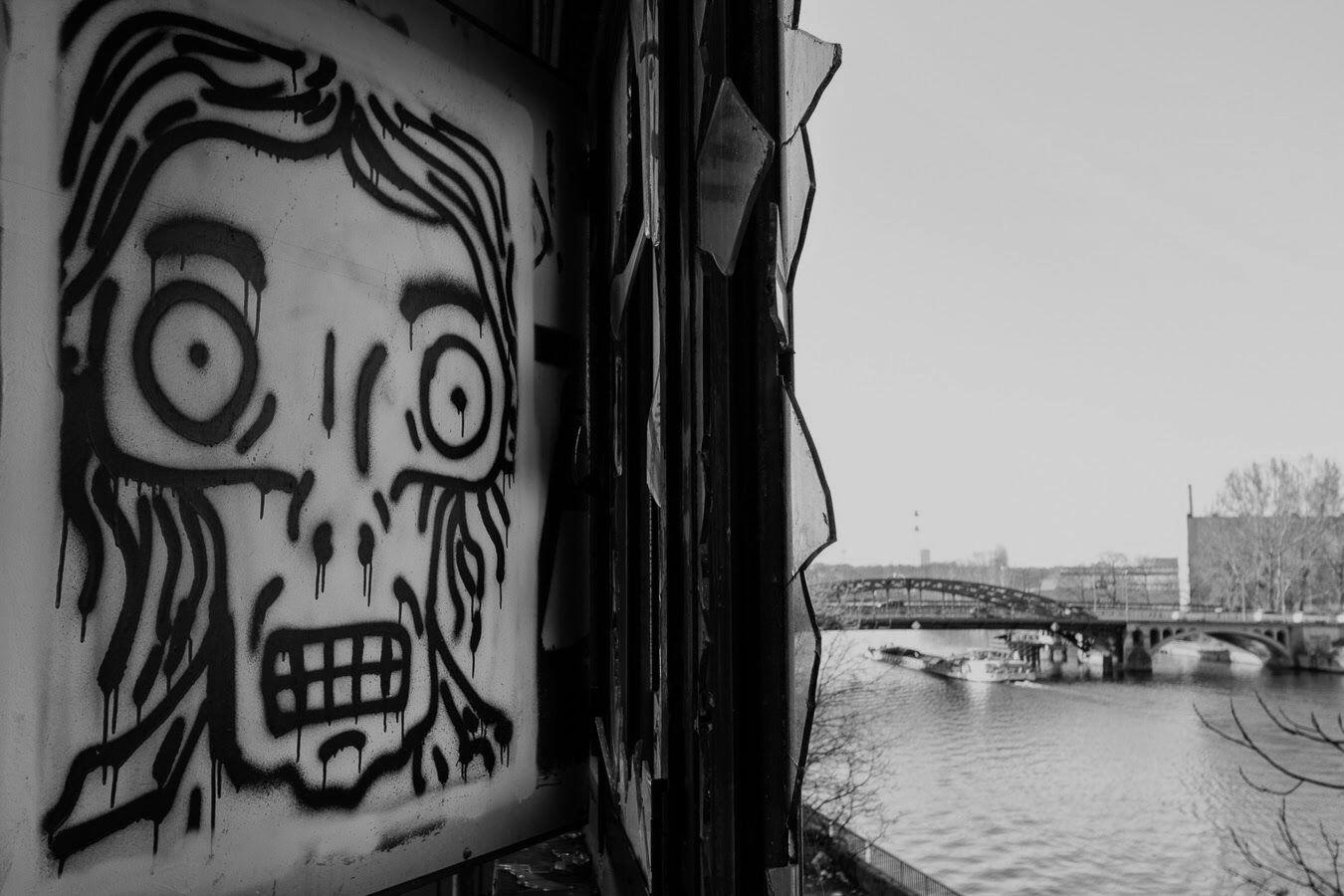
25 years ago this location was busy and filled with people working all day and trucks coming in and out to load crates of beer, today it's still where it was in the 90's but empty,degraded and full of colorful art.
So far this enormous massive industrial ruin has attracted negative news reports.
Massive vandalism, illegal parties and numerous arson attacks, just to name a few unpleasant incidents. The owners of the brewery, founded in 1882, also changed regularly over the years. and the whats going to happen with this space is still unclear, also if some rumors tell that 250 million euros are being invested to build offices, restaurants, shops and private universities in the area in Niederschöneweide.
During our exploration, me and Kai met some other people wandering around, one of these was Karen, a British girl that's into field recordings in abandoned locations like us!
So we joined forces and started recording all together while wandering around this immense location..
Meeting other people with very similar interests shaped my experience in a very profound way and motivated me to create this website [ in continuous evolution, new sections will be added soon ] and to work on something like the debuggedsoundprojekt
.
.
.
** from Bärenquell Brauerei: Bears' brewery gone bare (https://abandonedberlin.com/baerenquell-brauerei/)
02. Kinderkrankenhaus Weißensee
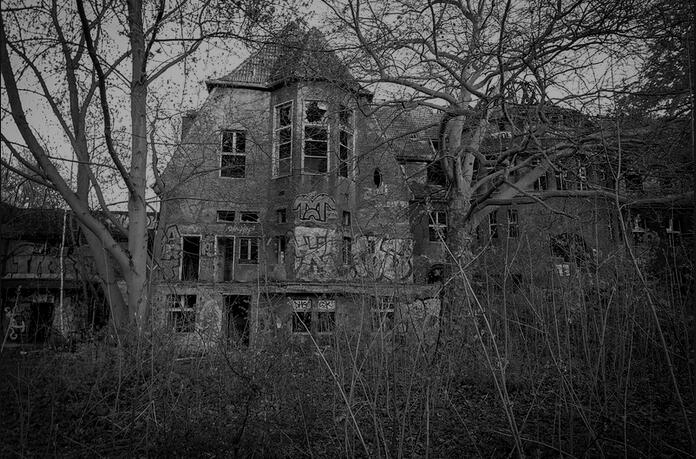
I visited this creepy location during a cold and grey December morning last year.
This time i decided to go solo, with only me, my thoughts and my field recorder... This location is also called the "zombie hospital" probably because of its creepy and shady aesthetics... you can nearly feel the souls of the many children that were recovered here in the past.
Inaugurated in 1911, Kinderkrankenhaus-Weißensee was the first municipal hospital of Prussia, complete with a 2.8 hectare park surrounding the hospital and an onsite dairy that produced milk for the young patients and their mothers. It survived two World Wars and the Cold War, but since its closure in 1997 has fallen into disrepair. MWZ Bio-Resonanz GmbH purchased the building in 2005, saying it was going to build a cancer-treatment center but was apparently a front for Russian investors and the buildings fell further into ruin. Eventually the site was given back and buildings and grounds are now protected as historic monuments under the care of the municipal government. Their future at this moment is unclear.
This location is definitely the creepiest i visited in Berlin, the particular architecture and the fact i went here on a cold and grey December day influenced my feelings very much in a positive way.
Going solo in such places can shape the experience in a radical way, the wind, squeaking doors and windows played strange games with my mind, making me feel like if i was followed by some strange ghost entity...
Narrow corridors, destroyed rooftops and windows, rats running around, empty spray cans and used syringes... This could be the perfect setting for a stinky and shady crack house...
below you can find a short snippet of what this location sounded like
Every time i visit places like this i ask myself : why can't they be used for people in need? why must we leave in decadence such spaces when there are so many human beings without a rooftop over their heads? Obliged to live in terrible conditions in Berlin's freezing winter, of course there are various active groups of volunteers offering help to people in need but why can't we just renovate such places and offer them as a shelter to who really needs a [ temporary, but still] home
03. Spreepark Berlin
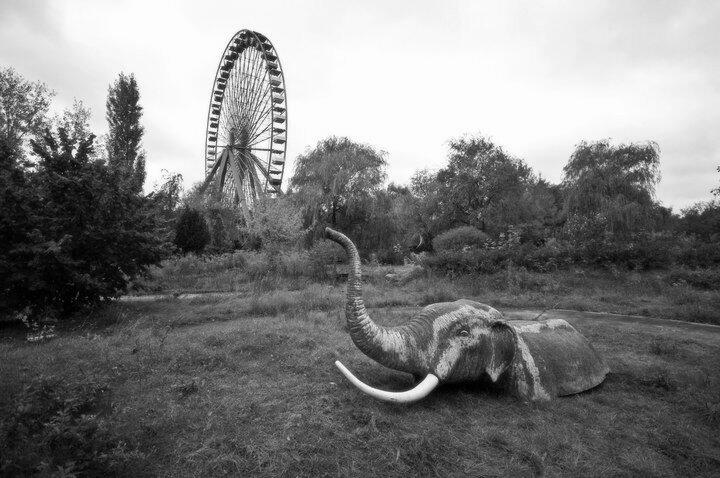
Opened in October 1969, Spreepark was once East Germany’s only amusement park. In its heyday, up to 1.5m visitors a year would flock to the 30-hectare patch of land wedged between the Plänterwald forest and the banks of the river Spree to visit its rides, many of which were imported from the west.
When the Berlin Wall fell, the number of people coming to Spreepark dropped by a third because of the bigger theme parks that were only a drive down the autobahn away and the state, which had previously financed the site, was no longer prepared to pick up the losses.
In 1991, Spreepark was sold to a private investor from the west, Norbert Witte and 20 years later it went bankrupt.
The books not only revealed debts of up to €15 million, but also several rides badly in need of repair.
In 2002 Witte decided to pack up six of his most popular rides – Baby Flight, Butterfly, Flying Carpet, Fun Express, Jet Star and Spider – into 20 shipping containers bound for Peru: a friend of a friend had told them that Lima was crying out for another Spreepark. But the mountain of debt grew rather than shrank. The ill-fated plan came crashing down in 2004, when some of the rides were shipped back to Germany and customs officers discovered 167kg of cocaine hidden in the Flying Carpet’s mast.
This place looks too incredible to be real or at least accessible to everyone... in fact it's surrounded by a very high metal fence and security guards with dogs are everywhere, making their best to "kick out" intruders and overly curious explorers.
Most of the people i met that visited Spreepark didn't "resist" long inside but there are some strategies to sneak in without being caught [ and no, dressing up and moving like a camouflage sniper isn't one of them]
Once inside we managed to resist for a good 30 minutes, and explored the most impressive parts of the park such as the enormous ferris wheel [that can be spotted from far outside the park ] and the degraded and enormous statues of dinosaurs and elephants... after walking for a while we heard sounds of dogs barking in the distance and after a few minutes, two enormous security guards caught us [ a bit like a guards and thieves game ] and asked us in a severe tone in German to get the fuck out or they would call police.
Although we didn't manage to record much here, we got some pretty good field recordings of nature and birds
Influences
Temporary Autonomous Zones
" We continue to pack our bodies into clubs, or warehouses, or buildings you've abandoned and left for naught, and we bring life to them for one night.
Strong, throbbing, vibrant life in it's purest, most intense, most hedonistic form.
In these makeshift spaces, we seek to shed ourselves of the burden of uncertainty for a future you have been unable to stabilise and secure for us.
We seek to relinquish our inhibitions, and free ourselves from the shackle's and restraints you've put on us for your own peace of mind.
We seek to re-write the programming that you have tried to indoctrinate us with since the moment we were born. "
The concept of the Temporary Autonomous Zone [Or T.a.z] was deeply observed by the anarchist writer and poet Hakim Bey, his thesis and visions about it can be found in his book T.a.z, wrote in 1991 and distributed all over the planet by independent publishers.
The book describes the socio-political tactic of creating temporary spaces that elude formal structures of control.
The essay uses various examples from history and philosophy, all of which suggest that the best way to create a non-hierarchical system of social relationships is to concentrate on the present and on releasing one's own mind from the controlling mechanisms that have been imposed on it.
In the formation of a temporary autonomous zone, Bey argues, information becomes a key tool that sneaks into the cracks of formal procedures. A new territory of the moment is created that is on the boundary line of established regions. Any attempt at permanence that goes beyond the moment deteriorates to a structured system that inevitably stifles individual creativity. It is this chance at creativity that is real empowerment. *
“The taz is a guerrilla operation which liberates an area [of land, of time, of imagination] and then dissolves itself to reform elsewhere/else-when”
This phenomenon can be surely observed in various contexts and periods of history , a known example are free parties and teknivals (born in the acid house years), where abandoned or "non controlled" spaces are temporarily occupied to build a party out of the normal economical schemes: No start or finish time, no fences, no security. No rip-off, basically.
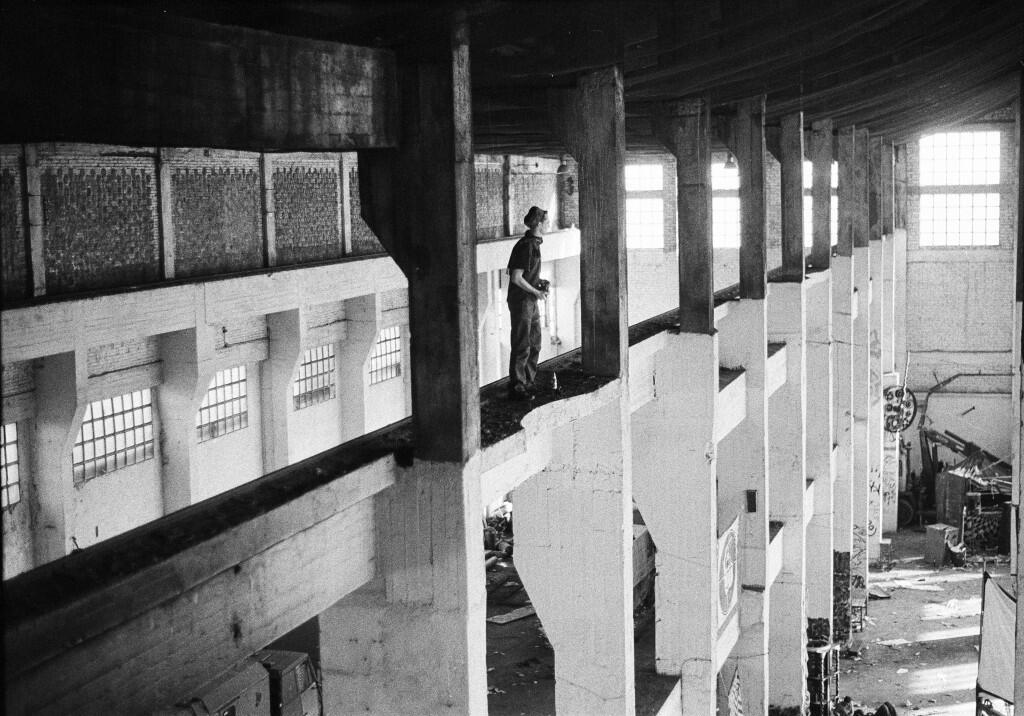
After various site inspections and once the right location is chosen, the creation of a T.A.Z can start... massive trucks are loaded with sound systems, equipment [and basically everything you need to throw a wicked rave] and what was a dirty and lonely space forgot from the world is now the center of the universe, just for one night or two.
In the end of this nineties,this subculture inspired many musicians, artists, sound technicians and more in general creative freaks to plan,organize,create a global network and movement all together.
A well known collective that helped give birth to this movement and fully embraced the ideals behind the T.A.Z concept were the Mutoid Waste Company, a performance arts group founded in West London in the early 1980s.
Influenced by the movie Mad Max and the popular Judge Dredd comics, they specialized in organizing illegal parties in London throughout the 1980s, driven at first by fringe music such as psychedelic rock and dub reggae, but then embracing the burgeoning acid house music movement by the late 1980s.
The group became famous for building giant welded sculptures from waste materials and for customizing broken down cars, as well as making large scale murals in the disused buildings where they held their parties, pure D.I.Y mentality from punk.
In 1989, after a number of police raids on their warehouse, they left the country and traveled to Germany where they became notorious for building giant sculptures out of old machinery and car parts, one of which was 'Käferman', a giant human figure with a Volkswagen Beetle for its chest, offering a Bird Of Peace sculpture that overlooked the Berlin Wall towards East Berlin and the regime of East Germany.
Below you can find a video snippet of the Mutoid Waste in Berlin [and in the Tacheles squat] during the Berlin wall period.
from https://en.wikipedia.org/wiki/TemporaryAutonomousZone
.
.
.
.
.
.
.
Foley, The World Of Cinematic Music And Techniques Used
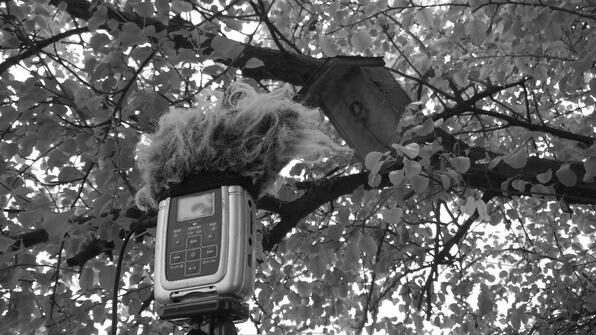
As mentioned in the introduction, Foley and Cinematic Music have been a major influence for this project, without having studied the techniques behind this fascinating world, this project would be [ and sound ] completely different.
The art of recreating sensations and feelings ( for a hypothetical movie and public) are at the roots of the debuggedsoundprojekt, where cinematic techniques have been used to recreate the emotions felt in the explored locations, in symbiosis with our vision of the future.
Foley is a unique sound effect technique that involves creating and “performing” everyday sounds for movies and television shows. Foley artists create these sounds in a recording studio during post-production, in synchrony with the picture, to enhance the quality of the audio. Foley sound got its name from Jack Foley, the sound effects artists who developed and shaped the technique.
Foley effects work both with and to replace the film sound recorded on set, which is known as the field recording. Most scenes use a combination of field recordings and foley effects.
Many classic sounds and techniques from the world of foley and cinematic music have been recreated in the debuggedsoundprojekt, some examples are bowed cymbals and squeaking doors.
Bowed cymbals are well known and used regularly in both contemporary written music and free improvisation.
By the 1950s, the use of bowed cymbals became a common practice among Hollywood sound designers, that used it to produce frightening or unusual effects.
The sounds produced by bowing a cymbal are difficult to control and it is not an accident that their use found favor mostly as orchestral effects, in ambient music, in indeterminate compositional practices, and in free improvisation.
Blending them with saturation and distortion can produce quite interesting "metallic" sounds, rich in ear cutting resonances.
Foley effects for sinister, horror movies have inspired this project very much, they can be heard all around the musical vojage.
In the DegradedExplorationListening_Session [Red Link Below] the foley and sound design of the video tend to replace the sound of the original video with some imaginary and hypothetical sounds of various spaces and contexts mixed together.
The mysterious melodies and lullabies work perfectly with the video and tend to amplify and enhance the magic behind the exploration of a mysterious and unknown space like the one seen in the images.
The idea of having a listening session instead of a "traditional" performance came to me when i casually visited this building [behind the Funkhaus] during a rainy afternoon with my friend Keivan.
I then had this "illumination" and decided to bring my ableton project, a camera and a basic usb controller to take a listen to the audio project in the best atmosphere possible.
The footage in the video is very d.i.y and imperfect but i actually like it like this, it has more of a "realistic" and grungy feeling of what a a urban degraded exploration could look like.
Without the passion and love for foley techniques and field recordings, this project would sound completely different.
**from Writing for bowed cymbals — a practical guide by
Luigi Marino (http://www.luigimarino.net/words/writing-for-bowed-cymbals.html)
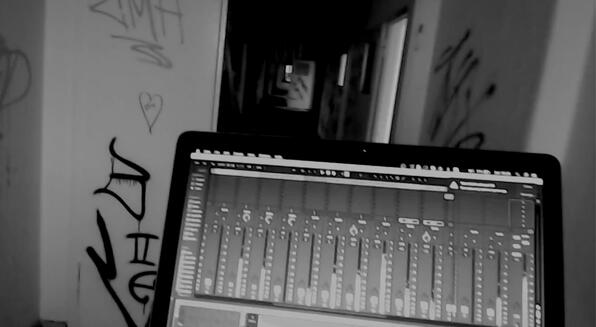
The Debugged Sound Projekt and the Degraded Exploration Listening Session
After months of explorations and gigabites of recordings, it was finally time to blend everything together and work on the most exciting part: creating a sonic vojage through different amospheres and contexts.
There isn't a defined logic behind the piece, and its always moving through different sonic environments, from misterious melodies and distorted drums in the beginning to conversations about life in Berlin and language differences between Italian and Spanish.
The various field recordings cope and fight with the mysterious and shady lullabies, in symbiosis with the feeling of exploring the unknown.
The DebuggedSoundProjekt broadcasted live with a listening session the 9th of june from an abandoned location in East Berlin.
I decided to bring my computer, a mini launchpad and a pair of headphones in an abandoned place in East Berlin, with the aim listening to the semi-finished ableton project in a context that symbolized what the Projekt is about.
Wandering around this sinister space with my laptop didn't feel like the safest possible idea , i was afraid that from a moment to another some strange creature would come out from the shadows and rob my macbook [a bit of paranoia is always present, but it can give loads of musical inspiration] everything went fine luckily.
During the listening session i met a few curious explorers like me [one can be seen in the video] and exchanged some words with them, explaining how the project worked and sharing the link to this blog, to further expand this network..
The Database
The database is a [currently under construction] file sharing platform focused on field recordings, where users can upload their material and exchange files.
Our aim is to generate a creative network of users from different backgrounds and contexts, to freely exchange sonic material for audio research, education and creation.
We believe that a space where to have easy access to high quality audio material is very useful for all the sound explorers out there.
The Database will be online around August 2020, we are currently working on it but in the meanwhile we are starting to gather files together to launch the Database with enough material.
The Database welcomes field recordings of every type, took in whatever space and atmosphere [without limiting itself to abandoned places].
If interested and willing to participate send a google drive or wetransfer folder [ with wav files preferably] to [email protected]
Database
Events
The Debugged_Database will showcase it's work live from an Abandoned location in Berlin the 9th of June 2020 here :
More info on time and date soon... stay tuned!
Contact:[email protected]